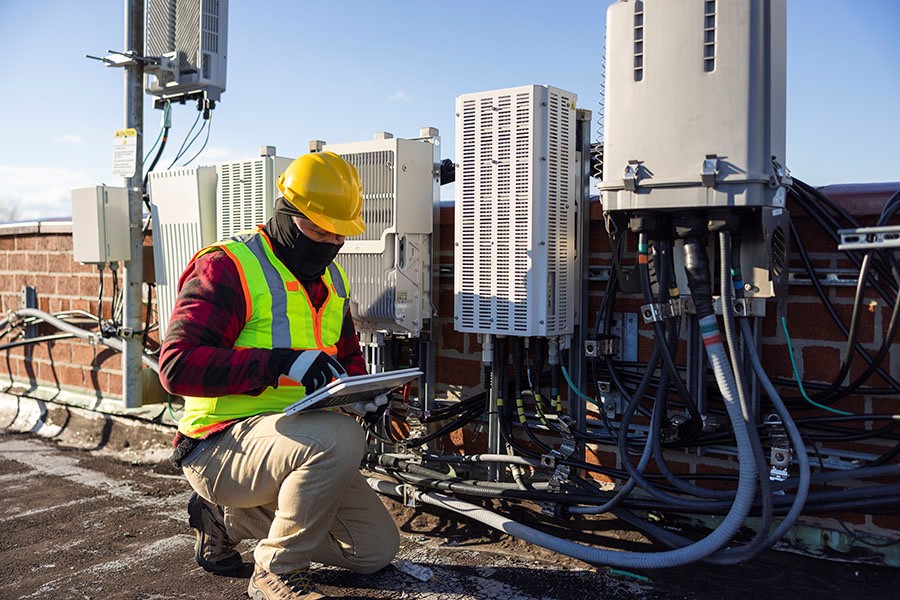
The era of reactive maintenance and disconnected facility operations is officially over. As enterprises face an aging infrastructure—with the average age of industrial fixed assets reaching 24 years, the oldest in nearly seven decades—traditional maintenance strategies are no longer sufficient to guarantee uptime and profitability. In response, forward-thinking organizations are rapidly adopting IoT asset management to bridge the gap between physical equipment and digital intelligence. By deploying interconnected sensors that continuously monitor asset health, companies are shifting from a ‘fix-it-when-it-breaks’ mentality to a highly proactive, data-driven approach.
The financial imperative for this transformation is undeniable. According to a recent comprehensive analysis by Mordor Intelligence , the global predictive maintenance market size was valued at USD 18.9 billion in 2026 and is projected to skyrocket to USD 82.17 billion by 2031, growing at an impressive CAGR of 34.14%. This explosive growth is largely fueled by the integration of the Internet of Things (IoT) into Enterprise Asset Management (EAM) and CMMS. For facility managers and operations executives, understanding and implementing IoT asset management is no longer just a competitive advantage; it has become a fundamental requirement for survival in an increasingly complex industrial landscape.
What Is IoT Asset Management and Why Does It Matter?
At its core, IoT asset management refers to the strategic use of internet-connected devices, such as smart sensors and actuators, to track, monitor, and manage physical assets in real-time. Unlike traditional asset tracking, which often relies on manual data entry or periodic barcode scanning, an IoT-enabled system provides a continuous, automated stream of operational data. This data includes critical parameters such as temperature, vibration, humidity, pressure, and energy consumption.
The true power of this technology lies not just in data collection, but in data synthesis. When these real-time sensor streams are integrated with a robust Enterprise Asset Management platform, organizations gain unprecedented visibility into the complete lifecycle of their equipment. This holistic view enables maintenance teams to detect microscopic anomalies long before they escalate into catastrophic failures.
This predictive capability directly addresses one of the most pressing challenges in modern facility management: the rising cost of unplanned downtime. Recent industry reports highlight that the mean time to repair has increased from 49 minutes to 81 minutes on average, driven largely by persistent skills gaps and supply chain delays for replacement parts. By leveraging IoT predictive maintenance, enterprises can schedule repairs precisely when needed—during planned operational pauses—thereby drastically reducing both downtime and the associated financial penalties.
How IoT Asset Management Works: From Sensor to Decision
The architecture of a successful IoT asset management deployment typically involves three interconnected layers: data acquisition, data transmission, and data analysis.
First, physical sensors are retrofitted onto legacy equipment or built directly into modern machinery. These sensors act as the nervous system of the facility, continuously measuring specific environmental and operational variables. Whether monitoring the air quality in a commercial high-rise or the fluid pressure in a manufacturing pipeline, these devices capture the raw physical reality of the asset.
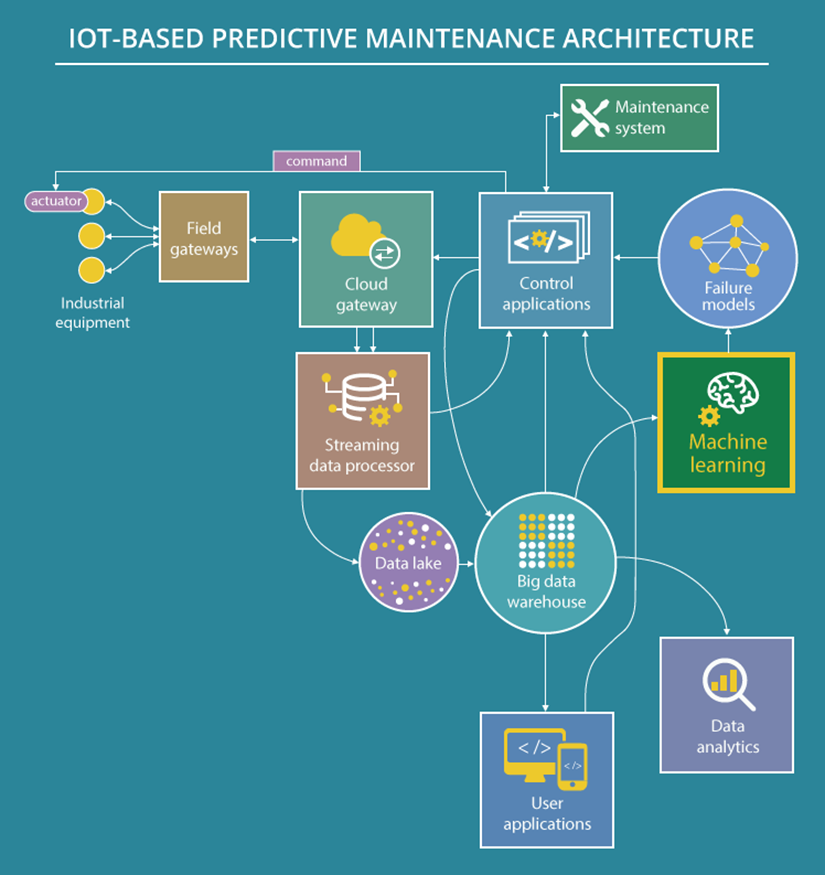
Second, the collected data is transmitted securely via wireless protocols—such as Wi-Fi, cellular networks, LoRaWAN, or 5G—to a centralized gateway or cloud platform. This continuous connectivity ensures that the information is always up-to-date and accessible from anywhere in the world.
Finally, the most critical step occurs within the software layer. Advanced analytics and machine learning algorithms process the massive volumes of incoming data. When integrated with an advanced IoT Solution, the system automatically compares real-time readings against historical baselines and predefined thresholds. If a parameter breaches acceptable limits, the system instantly triggers an alert and automatically generates a work order within the CMMS. This seamless workflow eliminates human error in data reporting and ensures that maintenance technicians are dispatched immediately with the correct tools and replacement parts.
The Business Case: ROI and Cost Savings
The financial return on investment (ROI) for IoT asset management is compelling and thoroughly documented. When organizations transition from reactive or strictly preventive maintenance to IoT-driven predictive strategies, the cost savings are substantial across multiple operational categories.
Research indicates that the integration of IoT sensors and predictive analytics can reduce overall maintenance costs by up to 25%. Furthermore, these systems are proven to decrease unplanned equipment downtime by 35% to 45%. To put this into perspective, consider the broader economic impact: it is estimated that Fortune 500 companies could save up to $233 billion in maintenance costs annually with the full adoption of condition monitoring and predictive maintenance technologies.
The benefits extend beyond mere maintenance budgets and directly impact environmental, social, and governance (ESG) goals. AI-driven HVAC optimization combined with IoT sensors can slash operational energy costs by up to 35%.
| Performance Metric | Typical Improvement Range | Primary Driver |
| Unplanned Downtime | 35% – 45% Reduction | Early anomaly detection and automated alerting |
| Overall Maintenance Costs | 15% – 25% Reduction | Elimination of unnecessary preventive maintenance |
| Equipment Lifespan | 20% – 30% Increase | Timely interventions preventing cascading failures |
| Energy Consumption | 10% – 35% Reduction | Real-time optimization of HVAC and lighting systems |
| Labour Utilisation | 20% – 25% Improvement | Shifting from routine inspections to targeted repairs |
IoT Asset Management in Practice: Real-World Applications
The transition from theory to practice is already well underway in various industries, from manufacturing plants to commercial real estate. In the context of a modern facility, IoT asset management is no longer an abstract concept but a daily operational reality.
Consider the challenge of managing a large-scale commercial HVAC system. Traditionally, a technician might perform a visual inspection every six months. If a bearing starts to fail in month two, the system will run inefficiently for four months, consuming excess energy and risking a catastrophic breakdown during peak summer demand. With an IoT-enabled system, vibration and temperature sensors continuously monitor the HVAC unit. The moment the bearing’s vibration signature deviates from the established baseline, the system alerts the facility manager and automatically schedules a work order. This proactive intervention, often referred to as predictive maintenance IoT, prevents the failure entirely.
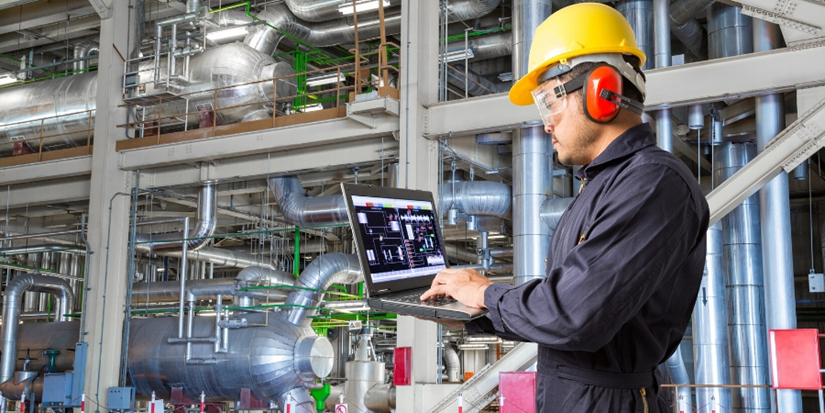
This proactive approach is crucial when considering why CMMS implementations often fail. Often, organizations deploy a CMMS without feeding it accurate, real-time data, leading to user abandonment. By integrating IoT sensors, the CMMS becomes a dynamic, self-updating system rather than a static repository of manual entries.
Similarly, in industrial manufacturing, the stakes are even higher. A single hour of unplanned downtime on a critical production line can cost tens of thousands of dollars. By deploying IoT sensors to monitor motor currents, fluid pressures, and machine temperatures, plant managers can reduce equipment downtime significantly. The real-time data allows them to shift from a reactive ‘run-to-failure’ model to a highly orchestrated, condition-based maintenance strategy.
Overcoming Common Challenges in IoT Asset Management Adoption
Despite the overwhelming evidence supporting its ROI, the widespread adoption of IoT asset management is not without its hurdles. Many organizations struggle with the initial integration of legacy equipment, data silos, and cybersecurity concerns.
One of the primary obstacles is the sheer volume of data generated by thousands of sensors. Without a robust analytics engine, facility managers can quickly become overwhelmed by ‘alert fatigue,’ where critical warnings are lost in a sea of minor notifications. To combat this, enterprises must ensure their EAM software is equipped with advanced filtering and machine learning capabilities to prioritize alerts based on asset criticality and potential financial impact.
Another significant challenge is aligning the new technology with existing workflows. As explored in the comprehensive guide on Asset Lifecycle Management in 2026, successful implementation requires more than just installing hardware. It necessitates a cultural shift within the maintenance team, moving away from calendar-based routines toward data-driven decision-making. Comprehensive training and change management are essential to ensure technicians trust and utilize the insights provided by the IoT system.

Conclusion: The Future Is Connected
As we navigate 2026, the mandate for operational excellence has never been clearer. The aging infrastructure of our facilities and manufacturing plants demands a smarter, more resilient approach to maintenance. IoT asset management provides the critical link between physical equipment and actionable digital insights, empowering organizations to slash costs, eliminate unplanned downtime, and achieve their sustainability goals.
The transition from reactive repairs to predictive, real-time asset monitoring is no longer a futuristic vision; it is the new standard for enterprise success. By embracing this connected ecosystem, facility managers and operations executives can transform their maintenance departments from traditional cost centers into strategic drivers of profitability. Ready to unlock the true potential of your facility’s data? Explore how advanced EAM and IoT solutions can revolutionize your operations and safeguard your bottom line for years to come.