As operational budgets tighten and the demands on commercial infrastructure intensify, predictive maintenance in facility management has transitioned from a theoretical concept to an absolute necessity. The days of relying solely on reactive repairs or calendar-based preventative schedules are rapidly fading. In 2026, facility managers are facing a structural shift driven by aging assets, strict environmental compliance demands, and persistent labor shortages. Consequently, adopting an AI-driven predictive maintenance strategy is no longer just an operational upgrade; it is a critical requirement for financial survival and sustained asset performance.
The shift toward proactive asset care is largely fueled by the integration of Artificial Intelligence (AI) and the Internet of Things (IoT) into Enterprise Asset Management (EAM) ecosystems. By leveraging real-time sensor data, modern facilities can anticipate equipment failures before they happen, thereby avoiding the catastrophic costs associated with unplanned downtime. This comprehensive guide explores the financial impact, technological requirements, and strategic implementation of predictive maintenance in facility management for 2026.
The Staggering Financial Impact of Predictive Maintenance
Understanding the true cost of equipment failure is the first step toward modernizing facility operations. Reactive maintenance—fixing assets only after they break—costs between three to ten times more than planned, proactive repairs. This dramatic cost difference stems from emergency labor rates, expedited shipping for replacement parts, and the devastating ripple effects of operational halts.
According to a comprehensive 2026 market analysis by MarketsandMarkets, the global predictive maintenance market is projected to surge from USD 9.71 billion in 2026 to an impressive USD 16.74 billion by 2031, reflecting a Compound Annual Growth Rate (CAGR) of 11.5%. This massive capital influx is a direct response to the proven return on investment (ROI) that these systems deliver. When facility management predictive maintenance software is correctly implemented, organizations frequently report a 15% to 30% reduction in overall energy costs alongside a 10% to 15% decrease in direct maintenance expenses.
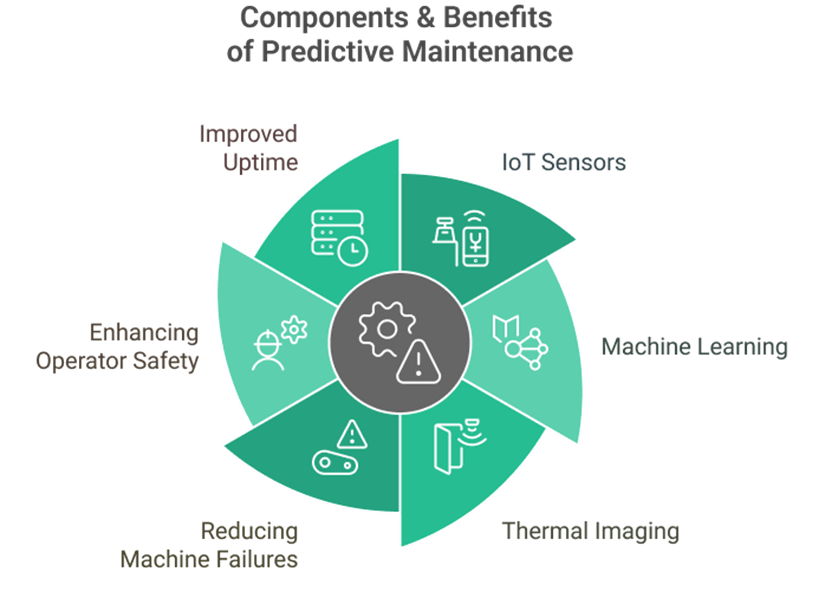
Furthermore, predictive maintenance ROI for facility managers extends far beyond simple repair budgets. By utilizing an IoT asset management approach, where real-time sensor data continuously monitors vibration, temperature, and acoustic anomalies, enterprises can reduce unplanned downtime by up to 45%. This level of reliability ensures that core business operations remain uninterrupted, protecting both revenue streams and brand reputation.
Predictive Maintenance vs Preventative Maintenance in Buildings
To fully grasp the value of modern EAM strategies, it is essential to distinguish between preventative and predictive approaches. While both aim to reduce unexpected failures, their methodologies and efficiencies differ significantly.
Preventative maintenance operates on a strict calendar or usage-based schedule. A technician might replace a critical HVAC filter every six months, regardless of its actual condition. While this is certainly better than waiting for the system to fail, it often results in the premature replacement of perfectly functional parts, wasting both materials and valuable labor hours.
Conversely, predictive maintenance in facility management relies on continuous condition monitoring. By analyzing real-time data streams through advanced algorithms, the system determines the exact moment an asset requires attention. If that same HVAC filter is operating in a pristine environment, the AI-driven predictive maintenance system might calculate that it can safely operate for nine months, thereby saving a maintenance cycle.
| Feature | Preventative Maintenance | Predictive Maintenance |
| Trigger Mechanism | Time or usage intervals (e.g., every 6 months) | Real-time condition and data anomalies |
| Resource Efficiency | Moderate (often replaces healthy parts) | High (repairs only when necessary) |
| Initial Investment | Low to Moderate | High (requires sensors and EAM software) |
| Long-term Cost Savings | Moderate | Very High (up to 30% reduction) |
| Downtime Prevention | Good | Excellent (anticipates specific failures) |
Overcoming Labor Shortages with AI-Driven EAM Systems
The facility management sector in 2026 is grappling with a severe and prolonged labor shortage. Experienced technicians are retiring, and fewer young professionals are entering the trades. This demographic reality forces organizations to do significantly more with fewer hands.
A recent 2026 AI & Digitalization in Facilities Management Report by Johnson Controls highlights this crisis, noting that 72% of facility managers report labor shortages having a moderate to severe impact on their daily operations. To combat this, leaders are turning to technology. The same report reveals that 65% of business leaders and 67% of facility managers are already utilizing AI to improve the operation and maintenance of their facilities.
When a facility management team is understaffed, deploying technicians to inspect healthy equipment is a luxury they cannot afford. Predictive maintenance acts as a force multiplier. By automatically triaging assets and generating work orders only for equipment that exhibits early warning signs of failure, a Computerized Maintenance Management System (CMMS) ensures that highly skilled technicians are deployed exactly where and when they are needed most.
Among organizations that have already deployed AI, 47% of facility managers utilize it specifically to enable predictive maintenance. Even more telling, 52% of managers planning new AI adoptions in the coming year are prioritizing predictive capabilities.
How to Implement an EAM Predictive Maintenance Strategy
Transitioning to a predictive model requires careful planning, robust technology, and a willingness to adapt traditional workflows. Organizations cannot simply install sensors and expect immediate results; the data must be integrated into a cohesive management platform.

First, organizations must establish a reliable data foundation. This involves auditing existing infrastructure and determining which critical assets—such as industrial chillers, large-scale air handlers, or manufacturing line motors—will benefit most from continuous monitoring. Not every asset requires predictive oversight; a standard lightbulb can still be managed reactively.
Next, the integration of high-quality data into an Enterprise Asset Management platform is paramount. As explored in our guide on how to measure and maximise EAM ROI, the true value of an EAM system is unlocked when it acts as the central nervous system for all facility data. The EAM platform must be capable of ingesting vast amounts of IoT sensor data, applying machine learning algorithms to detect anomalies, and automatically triggering actionable work orders.
Finally, facility leaders must address the friction of system integration. The Johnson Controls survey found that one-third of business leaders cite ‘ease of integration’ as the primary element they wish to change about their current workplace management systems. Selecting a comprehensive Facility & Tenant Service Management solution that seamlessly connects IoT sensors, CMMS workflows, and financial reporting tools is critical for scaling these advanced capabilities without creating isolated data silos.

The Future of High-Performance Facilities
The era of managing commercial buildings through guesswork and emergency responses has definitively ended. As we navigate the complexities of 2026, predictive maintenance in facility management stands as the most effective defense against skyrocketing operational costs, crippling labor shortages, and catastrophic equipment failures.
By embracing AI-driven analytics and deeply integrating them into robust EAM platforms, facility leaders can transform their maintenance departments from reactive cost centers into strategic drivers of profitability. The organizations that successfully implement these technologies today will not only reduce equipment downtime but will also secure a lasting competitive advantage in an increasingly demanding marketplace.