
1. Introduction: The Staggering Reality of EAM Projects
For decades, Computerized Maintenance Management Systems (CMMS) and Enterprise Asset Management (EAM) software have been touted as the ultimate key to unlocking operational efficiency, reducing downtime, and extending asset lifecycles. Yet, a dirty secret haunts the facility management and industrial maintenance sectors: a shocking number of these digital transformation projects fail to deliver their promised value. According to a landmark industry study published by Reliable Plant, an estimated 80% of projects experience CMMS implementation failure. This staggering statistic is consistent with broader enterprise technology research; for instance, McKinsey reports that 70% of all large-scale business transformations fail to meet their original objectives—a sobering benchmark that applies directly to CMMS adoption.
This isn’t a new problem, but it is a remarkably persistent one. The result? Millions of dollars in wasted capital investment, deeply frustrated maintenance teams, a breakdown in inter-departmental trust, and a continued reliance on inefficient, reactive workflows that drain profitability. When a system designed to create order instead creates chaos, organizational leaders are forced to ask: what went wrong? But what if the problem isn’t the software itself? What if the real culprit is something far more fundamental to the human element of operations?
This comprehensive article dives deep into the hidden causes behind these high failure rates. We will explore the fundamental misalignment between the software’s capabilities and the real-world workflows of the people who use it every day. We will explore why simply deploying a new tech tool is never enough, and how focusing on deep workflow alignment is the true key to successful EAM/CMMS adoption. For a deeper look at how underlying data quality intersects with this challenge, see our related guide on establishing high-quality CMMS data.

2. The Most Common Causes of CMMS Implementation Failure
Many organizations treat the deployment of a new CMMS as a simple IT project, severely underestimating the behavioral change required. As Maranda Dziekonski points out in a recent Facilities News report, the core issues hindering adoption are “almost always human and workflow-related, not technical.” A misaligned workflow inevitably leads to poor data quality, creating a vicious cycle that ultimately ends in project failur
2.1 Lack of Executive Sponsorship and Vision
A CMMS project cannot survive if it is viewed solely as a “maintenance department initiative.” Without strong, visible backing from C-suite executives, the project will lack the necessary funding, cross-departmental authority, and strategic alignment to succeed. Executive sponsors must clearly articulate how the new system aligns with broader business goals, such as reducing operational costs, improving safety compliance, or extending capital asset lifespans.
2.2 Inadequate End-User Training and Support
Training is frequently treated as an afterthought—a quick one-hour session squeezed in right before the go-live date. This is a fatal error. Technicians need comprehensive, role-based training that focuses not just on which buttons to click, but on how the software makes their specific daily tasks easier. Ongoing support, including accessible documentation and dedicated “super users” on the floor, is essential for long-term retention.
2.3 Over-Complicating the Initial Rollout
Organizations often fall into the trap of trying to implement every single feature of the CMMS on day one. This “big bang” approach overwhelms users and exponentially increases the risk of critical errors. A phased, iterative approach—starting with core functions like basic work order management and preventive maintenance scheduling, and gradually introducing advanced features like inventory tracking and predictive analytics—is vastly more successful.
2.4 Poor Data Migration and “Garbage In, Garbage Out”
Importing dirty, outdated, or duplicate data from legacy systems or spreadsheets into a brand-new CMMS guarantees failure from the start. If users cannot trust the asset registry, inventory counts, or historical maintenance logs, they will abandon the system. A rigorous data cleansing and standardization process must occur before a single record is imported.
2.5 Ignoring Mobile Accessibility Requirements
Maintenance work happens on the factory floor, on the roof, or in the basement—not behind a desk. If a CMMS requires technicians to walk back to a centralized computer terminal to log their work, it introduces massive friction. Mobile accessibility via smartphones or tablets is no longer a luxury; it is a mandatory requirement for real-time data capture and workflow efficiency.
2.6 Failure to Standardize Processes Before Software Deployment
A CMMS will not magically fix broken or inconsistent maintenance processes; it will only digitize and amplify them. Before implementing software, organizations must audit and standardize their standard operating procedures (SOPs), naming conventions, and workflow routing rules. Automating a bad process simply allows you to do the wrong things faster.
2.7 Disconnect Between Software and Actual Workflows
This is perhaps the most insidious cause of failure. If the software forces technicians to navigate through five screens to log a simple filter change, they will stop using it. The CMMS must adapt to the reality of the work environment, not the other way around. Systems that offer high configurability and workflow flexibility are vastly superior to rigid, out-of-the-box solutions.
3. 5 Critical Workflows That Determine CMMS/EAM Success
3.1 Work Order Management: From Chaos to Clarity
This is the absolute heart of any maintenance operation. A misaligned workflow looks like this: a frantic phone call to a call center, a scribbled note on a whiteboard, a delayed manual dispatch, and zero visibility for the original requestor. A properly aligned workflow, supported by a modern EAM system, digitizes this entire process seamlessly. Requests are submitted via a user-friendly mobile portal, automatically routed to the correct technician based on skill set and geographic location, and the requestor receives automated, real-time status updates. This eliminates bottlenecks and dramatically reduces response times.
3.2 Preventive Maintenance: Proactive vs. Reactive
Every organization wants to shift from a reactive, “firefighting” maintenance model to a proactive, preventive one. The core principle of preventive maintenance (PM) is simple: service assets regularly before they break, rather than repairing them after they fail. According to extensive research by Siemens, factories lose an average of 25 hours per month to unplanned downtime, with associated costs ranging from $39,000 per hour in the consumer goods sector to well over $2 million per hour in automotive manufacturing. A CMMS automates PM scheduling based on calendar dates or meter readings, ensuring critical maintenance is never missed.
3.3 MRO Inventory & Procurement: The Balancing Act
MRO stands for Maintenance, Repair, and Operations. Poor workflow alignment in MRO inventory management leads to two equally disastrous and costly problems: stockouts that halt critical repairs while a multi-million-dollar machine sits idle waiting for a fifty-cent O-ring, or massive overstocking that ties up valuable working capital in shelves full of rarely-used, depreciating parts. A properly configured CMMS tracks inventory levels in real-time, automates reorder points, and links directly to procurement workflows to ensure parts are always available when needed, without hoarding.

3.4 Vendor & Contractor Management: A Two-Way Street
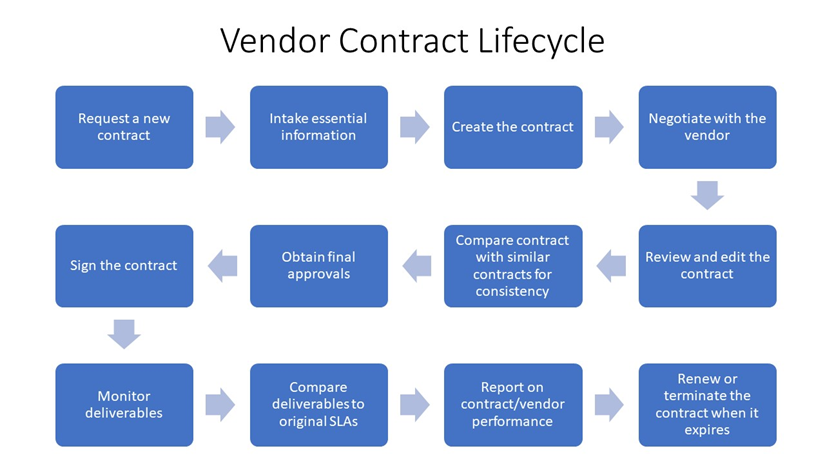
Most modern maintenance operations rely heavily on external vendors and specialized contractors. As Facilities Dive reports, nearly 70% of cyberattacks on commercial buildings in 2024 specifically targeted operational technology—and a significant proportion of these breaches occurred through compromised third-party vendor credentials. By managing all vendor access, work orders, and compliance documentation through a centralized, controlled EAM platform, organizations significantly reduce this attack surface while simultaneously improving contractor accountability and performance tracking.
3.5 Mobile Workforce Enablement: Data at the Point of Work
Today’s maintenance workforce is inherently mobile. If your CMMS workflow requires them to return to a desktop computer at the end of their shift to log their work, you have introduced a fundamental friction point that will inevitably degrade data quality and delay information flow. Details are forgotten, times are estimated inaccurately, and critical notes are omitted. A mobile-first EAM puts the full power of the system directly in the technician’s hands, allowing them to scan barcodes, upload photos of damaged equipment, access digital manuals, and close work orders directly at the point of work.
4. The Statistical Impact of Successful Implementation
When organizations successfully navigate the implementation process and achieve true workflow alignment, the statistical benefits are profound. The table below outlines the stark contrast between failed, misaligned deployments and successful, optimized EAM adoptions.
| Metric | Failed Implementation Impact | Successful Implementation Impact |
| Unplanned Downtime | +15% to +25% | -30% to -50% |
| Maintenance Overtime Costs | High (Reactive) | Reduced by up to 40% |
| Asset Lifespan | Decreased due to missed PMs | Extended by 10% to 20% |
| Data Accuracy | Below 60% (Estimated) | Above 95% (Real-time) |
| User Adoption Rate | Below 30% (Struggling) | Above 85% (Engaged) |
5. Conclusion: Stop the Cycle of Failure, Start with Workflow
The 80% rate for CMMS implementation failure is not an indictment of the software itself, but rather a severe indictment of the implementation strategy. The path to success does not start with a long list of technical features; it starts with a deep, empathetic understanding of your operational workflows and the people who execute them daily.
By prioritizing workflow alignment, prioritizing user experience, and ensuring rigorous data hygiene, you transform your EAM/CMMS from a glorified, expensive database into a dynamic, strategic tool that drives efficiency, improves data quality, and delivers a powerful return on investment. If you are ready to break the cycle of failed implementations and build a system that truly serves your operational needs, consider exploring SAMEX EAM — an enterprise-grade platform built with workflow flexibility and user empowerment at its absolute core.