There was a time when digital twins were a niche experiment confined to aerospace engineering floors and advanced manufacturing plants. That time has passed. In 2026, digital twin technology has crossed a threshold that every facility manager and IT leader needs to take seriously. The integration of a digital twin in facility management is no longer a future investment, but an active strategic decision point today.
The market data tells the story clearly. The global digital twin market is projected to reach $49.47 billion in 2026 and grow to $328.51 billion by 2033, at a compound annual growth rate of 31.1%, according to Cloud Latitude. This rapid growth signifies a shift from static 3D models to active, reasoning systems that provide immense value to building owners and operations teams. This comprehensive guide explores how a digital twin in facility management transforms enterprise asset management, drives massive cost savings, and ensures optimal performance.
The Evolution of the Building Digital Twin
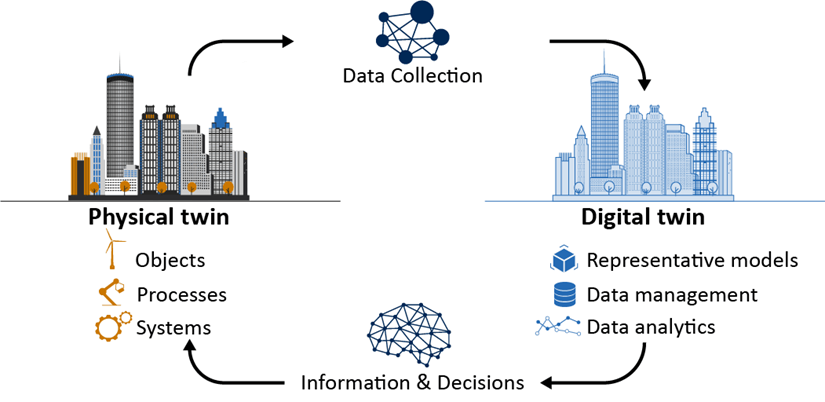
To understand why the urgency has intensified, it helps to understand what building digital twins have become. A digital twin is not simply a 3D visualization or a static simulation. As of 2026, digital twin technology is transitioning from static virtual replicas to intelligent, data-driven systems that integrate real-time analytics and advanced AI.
The practical shift is significant. Earlier versions of digital twins showed you what was happening in real time. With an autonomous twin, you get the advantage of a “what-if” engine. While your HVAC systems, elevators, and electrical grids work, the twin constantly runs thousands of mini-simulations in the background. This is the difference between a passive dashboard and an active decision engine.
By integrating generative AI, these systems can now build their own 3D assets and answer complex questions in plain language. Agentic AI allows these twins to move beyond alerts, enabling them to autonomously diagnose problems and execute repairs without human intervention. This is a fundamental shift from monitoring to action, turning the digital twin EAM into a core layer of enterprise intelligence.
Unlocking Massive ROI with Digital Twin in Facility Management
One of the primary reasons digital twins remained stuck in pilot phases for years was a weak return on investment (ROI) narrative. That objection is now harder to sustain. Companies using digital twins report measurable reductions in unplanned downtime of 65%, improvements in asset utilization of 62%, and faster decision-making cycles of 90%.
These are not marginal efficiency gains; they represent operational transformation. According to McKinsey research cited by industry analysts, digital twins accelerate AI development and deployment by up to 60% while cutting operational costs by up to 15%. For facility managers who are already under pressure to show returns on investments, the connection is direct: a digital twin in facility management is one of the fastest ways to operationalize AI at scale.
Furthermore, predictive maintenance delivers fast, measurable ROI and requires relatively contained implementation scope. Predictive maintenance via digital twins can lead to 79% cost savings, making it an effective entry point for organizations building their first production-grade twin. This aligns perfectly with strategies to measure and maximise EAM ROI, turning asset management into a profitability driver.
How Digital Twins Reduce Maintenance Costs in Facility Management
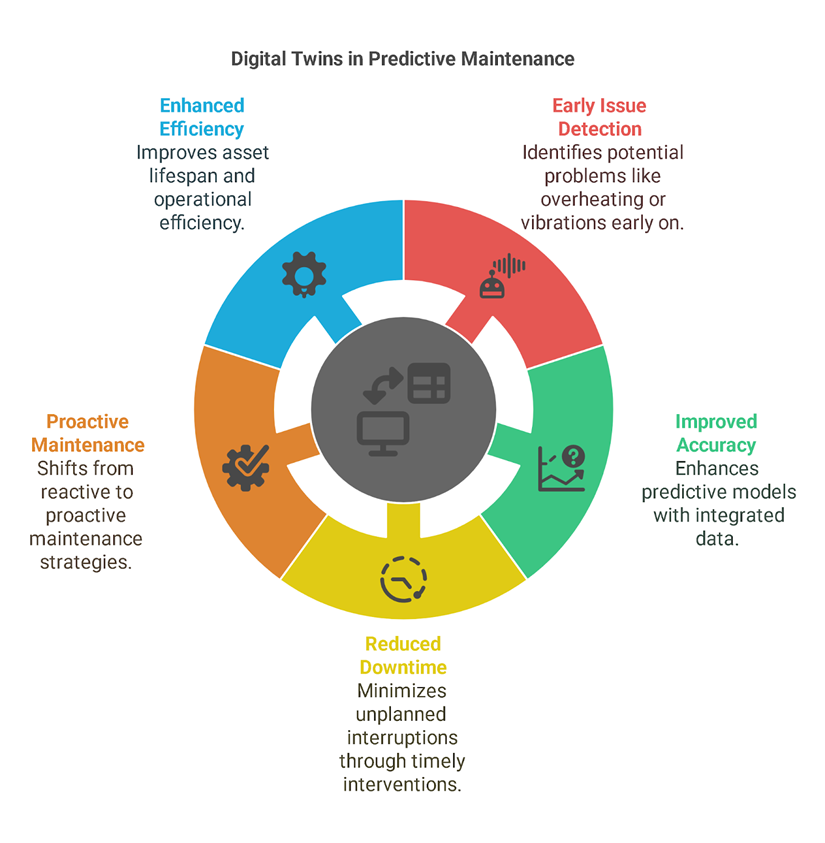
The traditional approach to facility maintenance relies heavily on reactive repairs or scheduled preventive maintenance, both of which can be inefficient and costly. A building digital twin changes this paradigm by enabling highly accurate predictive maintenance.
Shifting from reactive to predictive maintenance via digital twins can extend the life of critical building equipment by 10% to 15%, significantly reducing unplanned capital expenditure. By analyzing real-time data from IoT asset management sensors, the digital twin can identify anomalies and predict failures before they occur. This proactive approach eliminates unnecessary preventive maintenance activities while simultaneously avoiding reactive repairs.
Facilities that rely on predictive maintenance via digital twins report up to 40% fewer breakdowns and significantly lower maintenance costs. By integrating these capabilities with a robust Computerized Maintenance Management System (CMMS), organizations can automate work orders, optimize spare parts inventory, and ensure technicians are dispatched only when necessary, further driving down operational expenses.
Overcoming Fragmented Information Silos
Facility management teams spend nearly 35% of their time searching for fragmented information across various disconnected systems. A digital twin in facility management mitigates this massive inefficiency by centralizing logs, PDFs, warranties, and Building Management System (BMS) data into a single, cohesive environment.
When all asset data is consolidated within a digital twin EAM platform, facility managers gain unprecedented visibility into their operations. This single source of truth empowers teams to make informed decisions quickly, reducing the time spent tracking down information and increasing the time spent on value-added tasks. This capability is essential for modern facility and tenant service management, where rapid response times and high service quality are paramount.
Optimizing Energy Consumption and Sustainability
As environmental regulations tighten and energy costs rise, sustainability has become a critical strategic priority. Real-world implementations show that digital twins can reduce building energy consumption by up to 20% by providing facility management teams with the context needed to ask “why” specific systems are driving usage rather than just tracking “what” was used.
In energy and construction sectors, digital twins are enabling property owners to lower energy consumption by up to 50% while reducing operating costs by 35%. By continuously monitoring energy usage patterns and simulating different operational scenarios, a building digital twin can identify inefficiencies and recommend adjustments to optimize performance. This directly supports broader energy management strategies aimed at cutting costs and meeting ESG goals.
Implementing Digital Twin in Enterprise Asset Management
While the benefits are clear, implementing a digital twin in enterprise asset management requires careful planning and robust infrastructure. Digital twins rely on continuous, high-quality data from multiple sources, including IoT sensors, operational systems, ERP, and external data feeds. Many organizations struggle with fragmented data landscapes and legacy systems that were not designed for real-time integration.
This is where IT leadership plays a decisive role. Data architecture decisions made today either enable or obstruct digital twin capability tomorrow. Organizations that invest in clean integration layers and interoperable data infrastructure are building the foundation for far more than just twins.
To successfully implement a digital twin in facility management, organizations must:
- Define Clear Objectives: Start with specific use cases that offer high ROI, such as predictive maintenance for critical HVAC systems or energy optimization for large commercial buildings.
- Ensure Data Quality: Establish rigorous data governance protocols to ensure the accuracy and reliability of the data feeding the digital twin.
- Leverage Cloud Infrastructure: The cloud services segment is expected to hold 61% of the digital twin market share by 2035, according to Global Market Insights. Cloud infrastructure provides the scalability, connectivity, and AI services necessary for enterprise-grade deployment.
- Integrate with Existing Systems: Ensure seamless integration between the digital twin, EAM, CMMS, and IoT platforms to create a unified operational ecosystem.
The Future of Facility Management Technology in 2026
The strategic question for 2026 is not whether digital twins belong in the enterprise. That question has been answered. The question now is where to build first, how to sequence the investment, and which cloud and data capabilities need to be in place to support scale.
Only 15% of organizations are currently moving digital twins from pilot projects into core operational workflows. That is both a warning and an opportunity. The window to build early-mover advantage is still open, but it will not stay open indefinitely. The organizations already extracting value from digital twins share a common characteristic: they stopped treating them as isolated IT projects and started viewing them as a core layer of enterprise intelligence.
In conclusion, the adoption of a digital twin in facility management is a game-changer for asset-intensive organizations. By enabling predictive maintenance, breaking down information silos, and optimizing energy consumption, digital twins deliver substantial cost savings and operational improvements. As facility management technology continues to evolve in 2026, embracing digital twins is essential for staying competitive and maximizing asset performance.